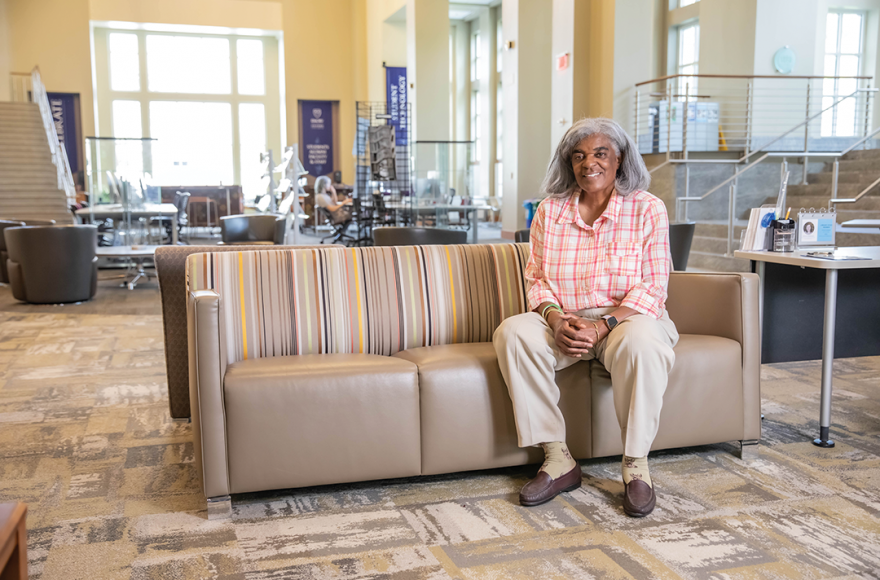
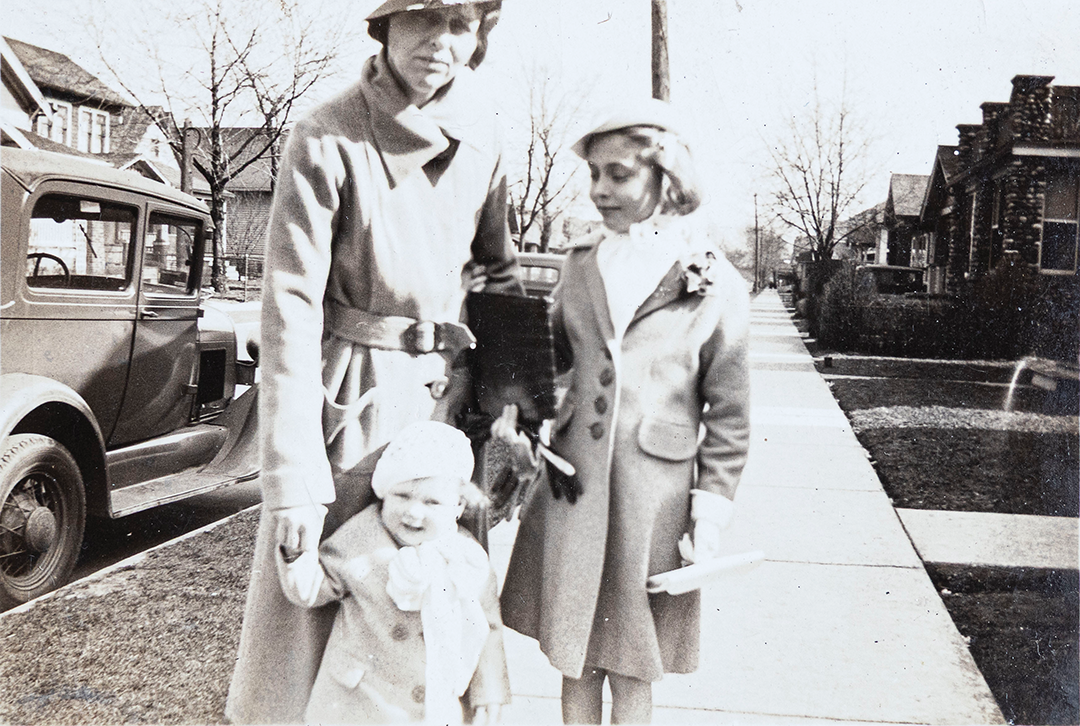
Faith, family, fortitude and fitness: words that define the wonderful life of 90-year-old Dr. Judy Greer. She was born in Detroit in 1935, the second daughter of Jamie and Odessa Greer. Her parents were raised in Georgia as farmers. However, after a devastating boll weevil invasion destroyed the cotton industry, Jamie joined dozens of other young local men who decided to move to Michigan to work in the new automobile industry. Odessa died when Greer was just 2 years old.
“My only sister, Doris, was eight years older than I, but my mother was one of seven girls and three boys,” she said. “One of her sisters, Mabel, lived in Cusseta—a small town near Columbus and Fort Benning—and never had children, so a year or two after Mother died, Daddy moved us back down here to live with Aunt Mabel and Uncle Bill.”

Bill and Mabel Zachry raised the girls while Jamie took an opportunity in Florida to work at a new bulk plant for gas and oil production. He visited his daughters often, and they spent summers with him in Florida. Greer recalls a happy childhood, filled with days spent almost entirely outdoors.
“I went hunting with Uncle Bill. I shagged golf balls for him, climbed trees,” she said. “I was a tomboy, and it didn’t bother me a bit. I was never told there was anything I could not do, unless it was unsafe. I don’t think that I would’ve been labeled as a child who needed Ritalin, but I was active all the time.” Greer even learned to drive when she was 12. Another favorite childhood memory was walking to downtown Cusseta to visit everyone. “I’ve always been oriented toward activity wherever I was, physical and social activity,” she said. “It took a town to raise a child, and Oxford was also like that when I moved here. Kids could play anywhere. I used to say that you could safely play a game of marbles on Emory Street, but of course, you can’t do that anymore.”
"I was never told there was anything I could not do, unless it was unsafe." — Dr. Judy Greer
Though she was always naturally gifted in fitness and sports, growing up in Cusseta limited her access to athletics. “We did not have many organized sports in the community or in high school,” Greer said. “We had basketball and some softball but not much.” Basketball was her favorite sport—until she tried tennis. “I never saw a tennis court until I went to LaGrange College in 1953,” said Greer, who attended the school on a work-study program in physical education. While pursuing a bachelor’s degree in English and history, she took lessons to learn to play tennis. “I found out that I liked tennis a lot. Because I had a lot of natural ability for movement, I picked it up very easily, but I had to relearn some of my strokes, which weren’t altogether efficient,” she said. “I had to reteach myself how to play tennis so I could teach others.”
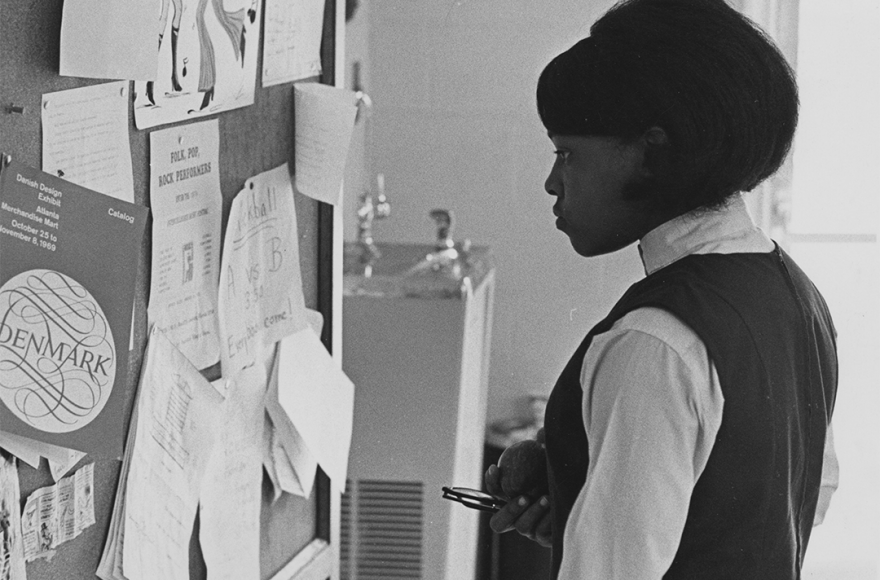
Greer was a serious student who worked hard to fund her own education. During the summer, while her friends went to camp or the beach, she worked at a cattle farm owned by her aunt and uncle in Cleveland. She also worked as a resident assistant on a dorm floor with 16 girls, including the daughter of Virgil Y.C. Eady, the dean at Oxford College. While Greer was visiting the family one weekend, Eady asked her what she planned to do after college. When she told him she was undecided, he invited her to come to Oxford. The school had only been open to female students for four years, but it had reached the point where it was necessary to add a woman professor to the physical education department.

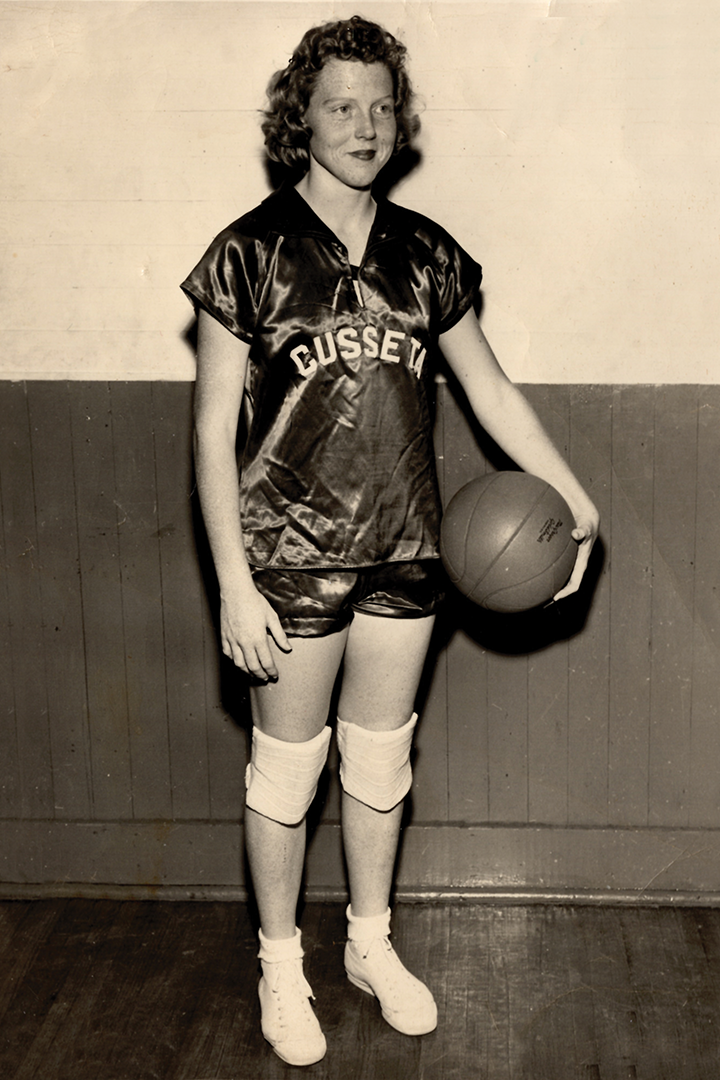
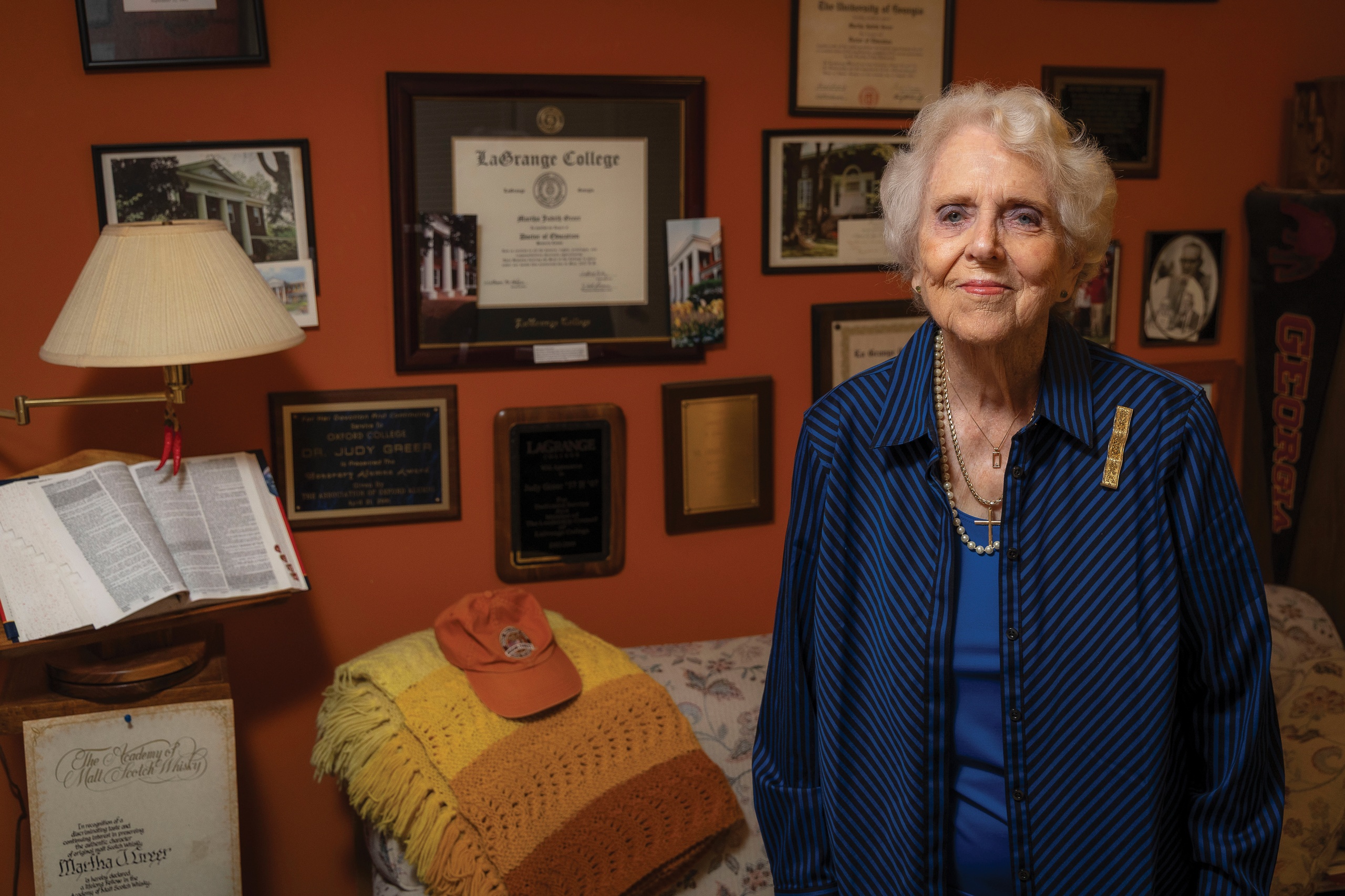
“I came to Emory at Oxford to teach in 1957,” Greer said. “At the time, this was predominantly a men’s college. There were only 40 women in the women’s residence hall.” Eady initially offered Greer a one-year appointment, with the caveat that she must begin working toward her master’s degree. She accepted, and an Emory legend was born. Greer earned her master’s from Auburn University in 1961 and left Emory to teach at Winthrop College, a four-year program in South Carolina. “Teaching at Winthrop meant I could teach physical education theory, as well as activity courses,” she said. Greer returned to Oxford in 1966 and stayed at the school until her retirement in 1996. She took a two-year leave of absence to earn her doctorate in education, physical education and higher education from the University of Georgia. “My dissertation at UGA was a biographical study of women who had started the women’s physical education program there,” Greer said. “I became interested in the history of sport. I didn’t have as much interest in the scientific part of movement. I was interested in the people who brought physical education into the colleges.”
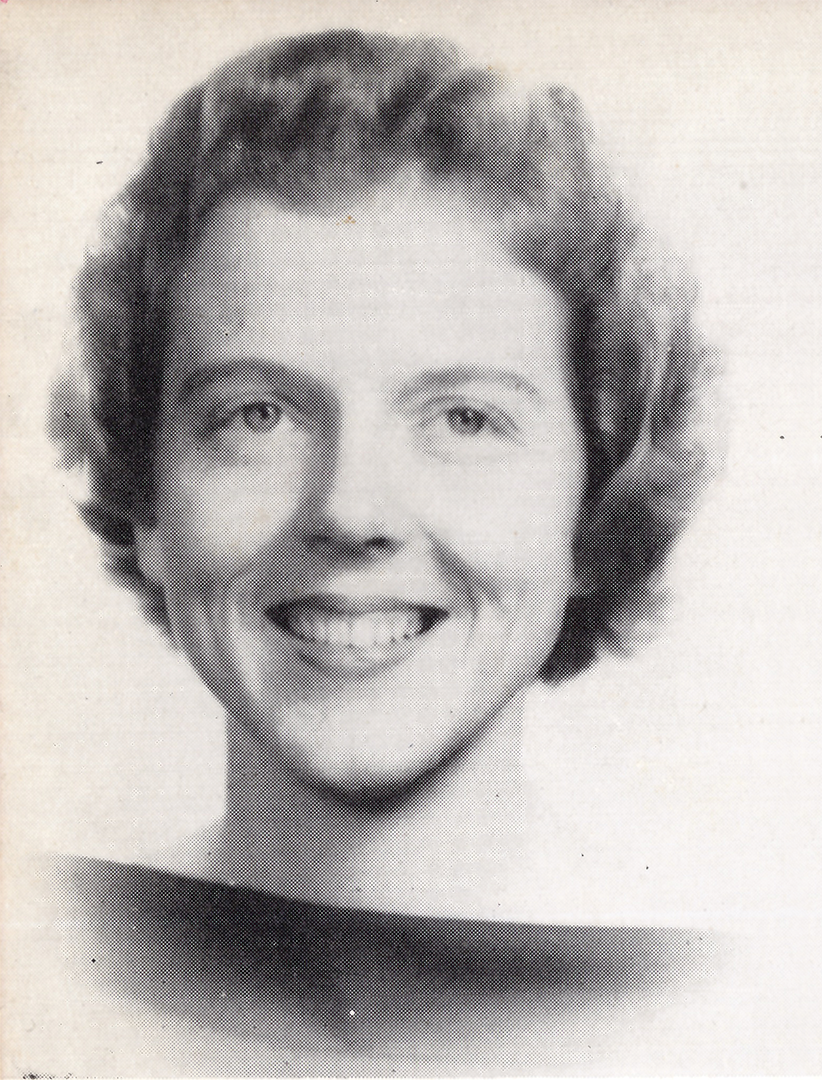
Greer threw herself fully into her role. “I taught dance, volleyball, badminton and swimming. In many instances, I had to relearn [techniques] myself, but I didn’t spend as much time on them as I spent on tennis,” she said. “Our health and PE division didn’t have a big budget, so we had to cut a lot of corners for equipment and travel, but our intramural program was always so strong. Every student did something, and there were tests and grades.” Greer commended Emory’s philosophy that athletics were meant for all and worked to involve the community as much as possible. She was instrumental in creating women’s and men’s tennis leagues, running tennis summer camps for kids and hosting women’s and mixed doubles tennis tournaments. Although her students called her Coach Greer, she always considered herself more of a teacher than a coach.
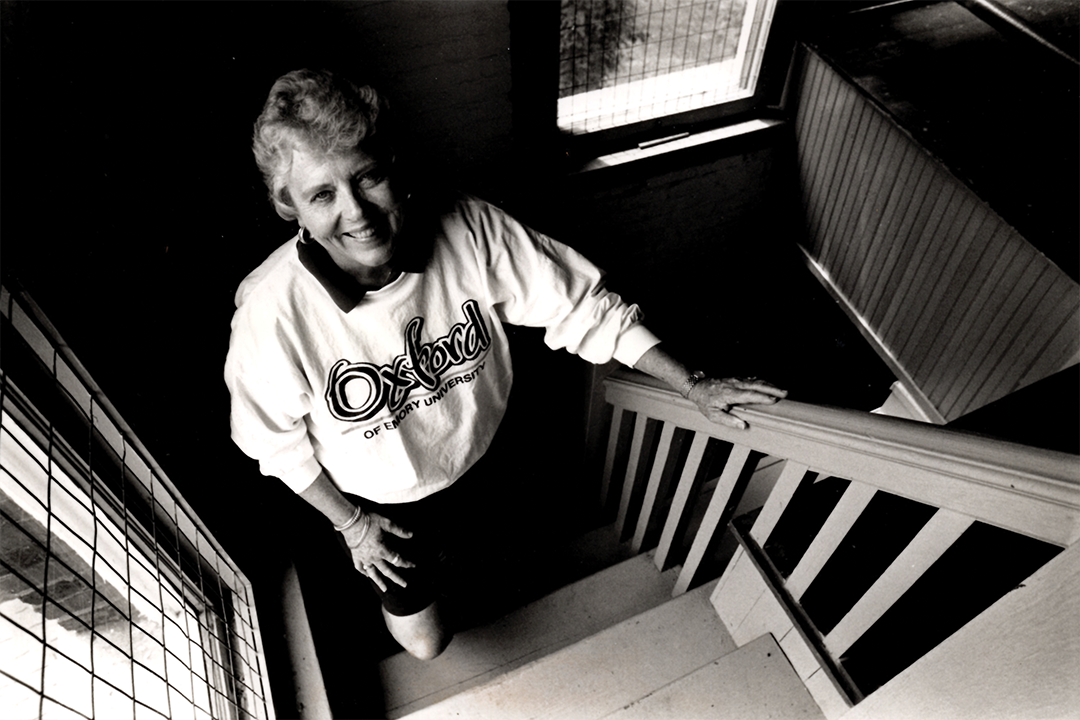
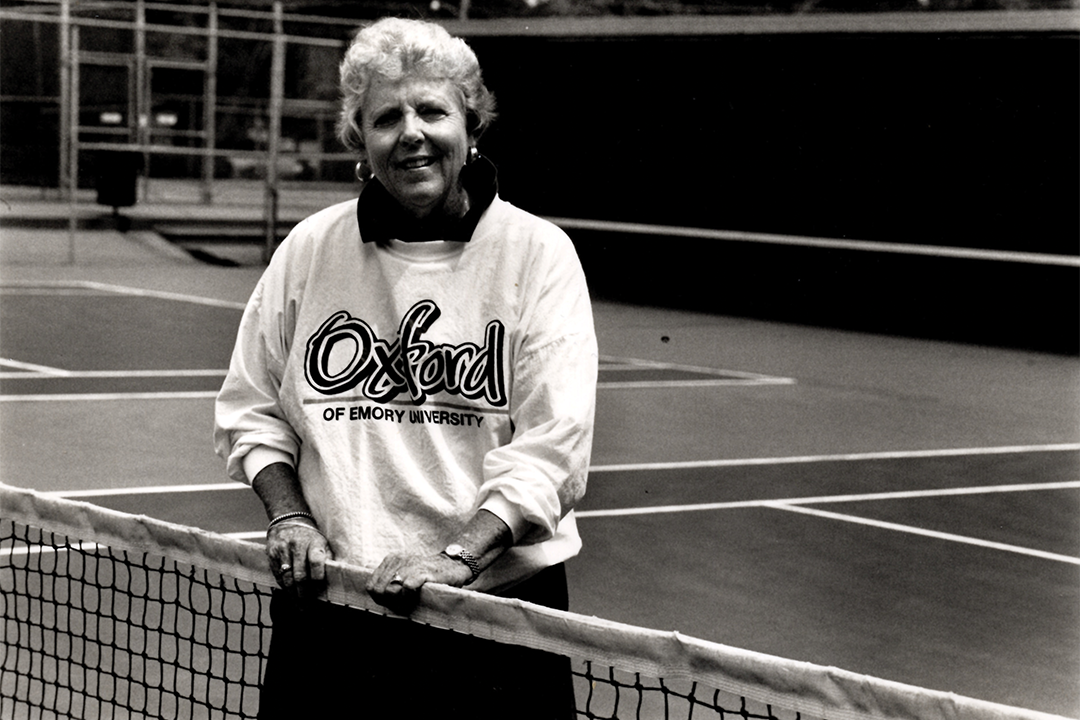
“The fact that you can open another person’s mind to something that they had never had any inkling of before, and you see the light come on or the ball go over the net, that sort of thing, that’s pretty exciting,” she said. Greer also enjoyed mentoring new female faculty members as their presence grew on campus. Many of them became close friends, with their children becoming like nieces and nephews to Greer. She still keeps in touch with many of them. “I always had a circle of friends in the community,” she said. “Very few faculty members lived in places other than Covington, and many lived in a row of houses on Dowman Street that’s still there today.”
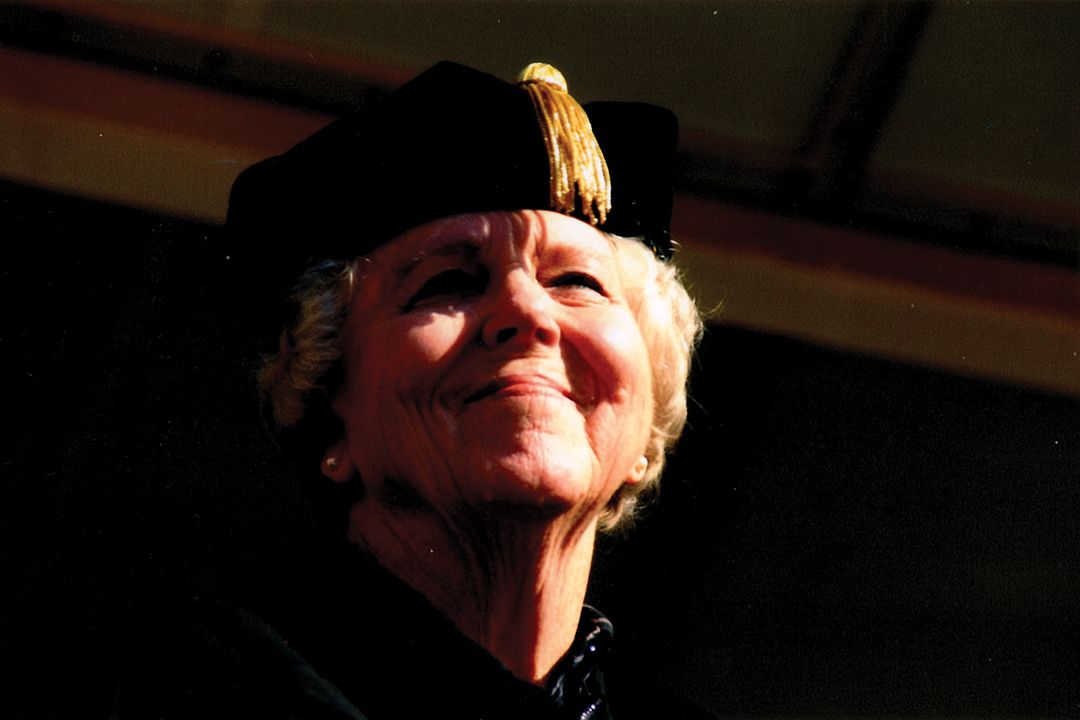
Greer, a member of Allen Memorial United Methodist Church since she arrived in Oxford, never married or had children of her own, but she has no regrets. Friends often encouraged her to adopt a dog to keep her company, but she disagreed. “I’ve always loved animals,” she said. “My Uncle Bill raised and trained bird dogs, so I was around dogs all my life, but I didn’t have time to take care of them.” If the walls of her home could speak, they would tell of countless student visits, as they dropped in to hang out with a popular professor who never seemed lonely and dispensed sound advice. Greer has always been involved in the lives of her many nieces and nephews, and framed photos of their times together fill her home.
Travel was another significant part of Greer’s DNA.
“I’ve been to three Olympics: Munich, Barcelona and Atlanta,” she said. “I traveled through Europe over nine weeks one summer. I’ve been to Wimbledon twice, to the French Open and the U.S. Open. The only major tennis event I’ve not gone to is the Australian Open.” In recent years, Greer has had to pick and choose the activities in which she can participate, but she does her best to remain active with her large extended family. Many of her first cousins live nearby and gather for Thanksgiving, as well as for the Greer family reunion held every other Fourth of July.

When Greer walked off the tennis court on her last day at Oxford College, she was struck by a thought: “Where has the time gone?” Thirty years had passed far too quickly. “As I look back on my life, everything I was involved in was always directed toward the betterment of the school and the county itself,” Greer said. “I’ve always been interested in folks and wished that everything would be alright for all of them, at least as right as everything has been for me. I have had a blessed life. I can’t imagine living anywhere else.”