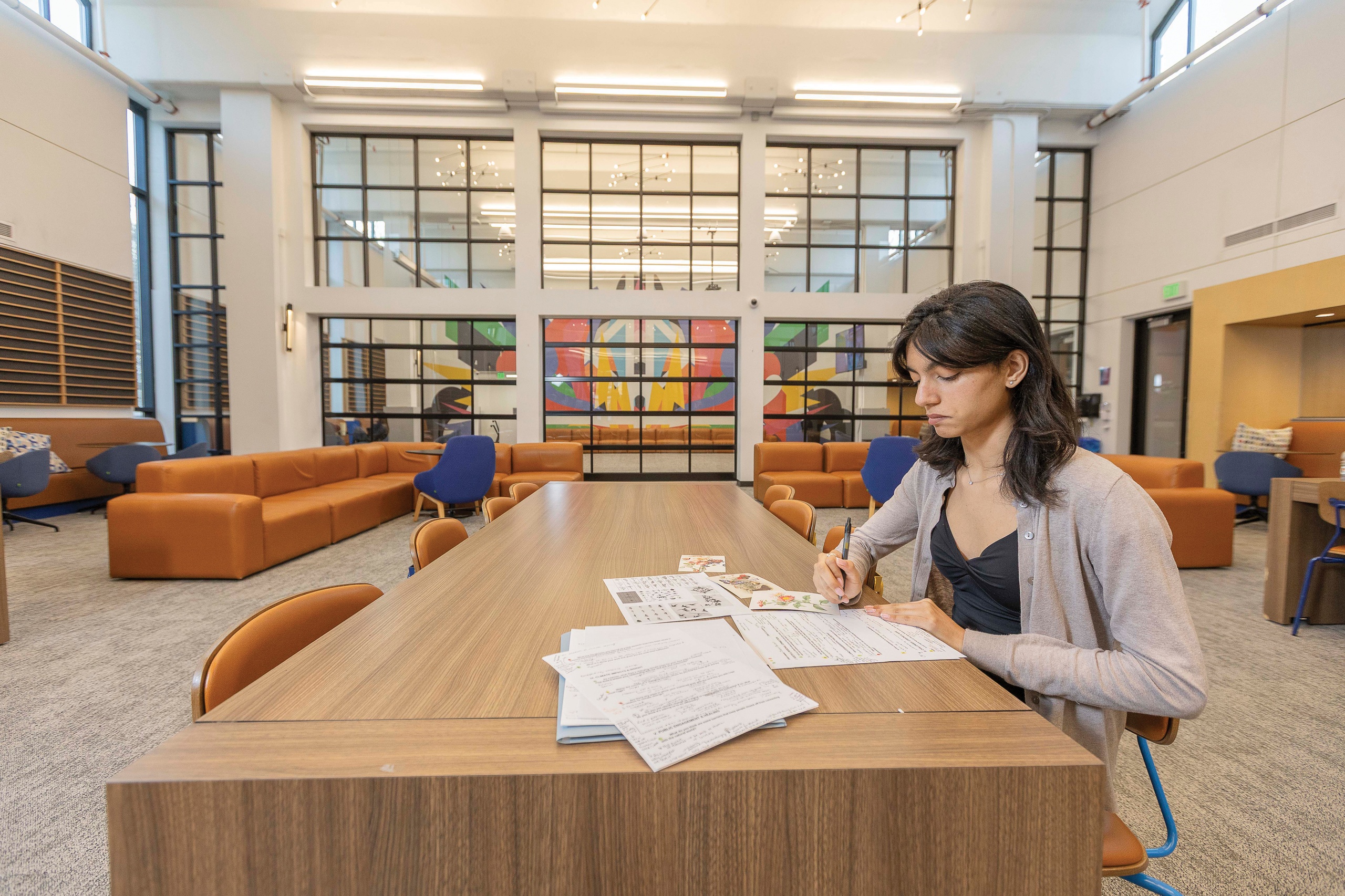
Kaela Moscati, now a third-year student at Emory University in Atlanta, spent part of her second year at Oxford College studying climate and environmental studies. While she was taking natural science classes during the spring, she also found an English course that piqued her interest: Climate Grief, Climate Hope, which was taught by Professor Stacy Bell McQuaide. Students in the class read Octavia E. Butler’s “Parable of the Sower,” Emily St. John Mandel’s “Station Eleven” and Lisa Wells’ “Believers: Making a Life at the End of the World,” among other speculative fiction works that showcased a world transformed by climate change and catastrophes.
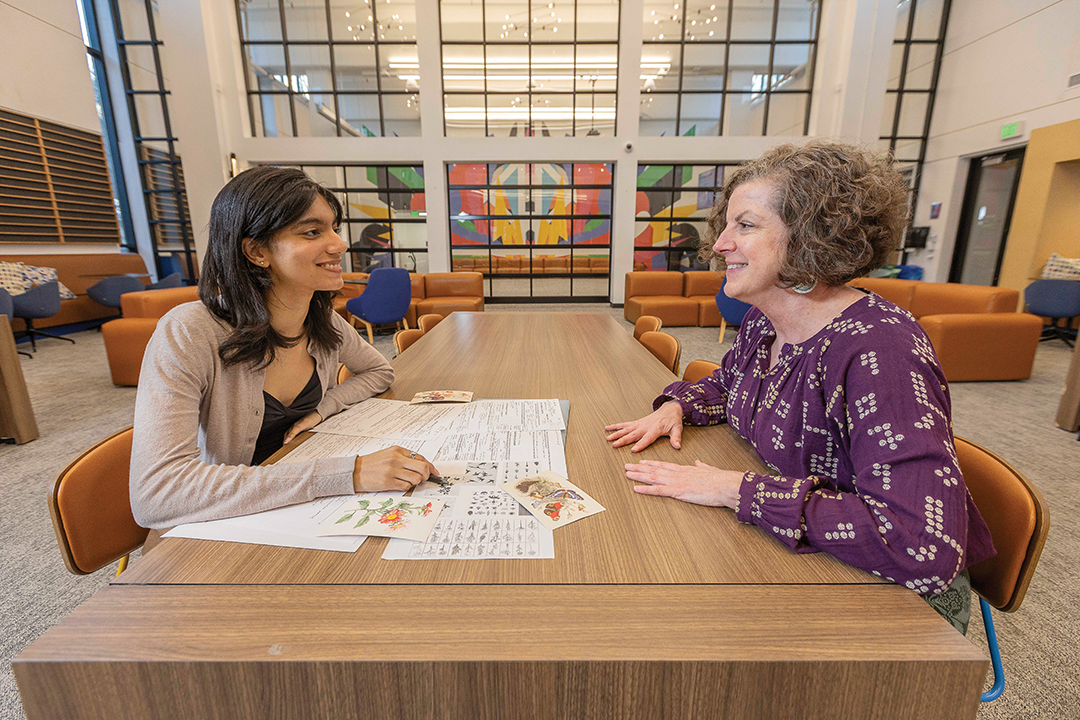
“Our connection is cross disciplinary,” said McQuaide, whose syllabus indicated that the class envisions alternatives to nihilism. “It really highlights the function or goal of liberal arts at Oxford.”
Students wrote a reflective-analysis piece for each work they read, a capstone personal narrative and, in lieu of a final, an experiential narrative that reflected the class.
“We were able to have roundtable discussions,” said Moscati, who is studying environmental science on a social science and policy track, with English as a minor. “I was so interested in the class material that I thought it would be cool to extend that.”
"I’ve always loved the environment and spending time in nature." — Kaela Moscati
During her spring semester, Moscati received an email about the invitation-only Summer Oxford Research Scholars program and decided to apply. She consulted with McQuaide and wrote a proposal that included her coursework and interest in science and English, as well as environmentalism and the overall climate crisis.
“I’m really enjoying environmental education and bridging the community together with social science research and environmental justice,” said Moscati, who grew up in her native New York with memories of picking cherry tomatoes with her family, and later in Conyers, where she foraged figs from her grandmother’s garden. “I’ve always loved the environment and spending time in nature.”
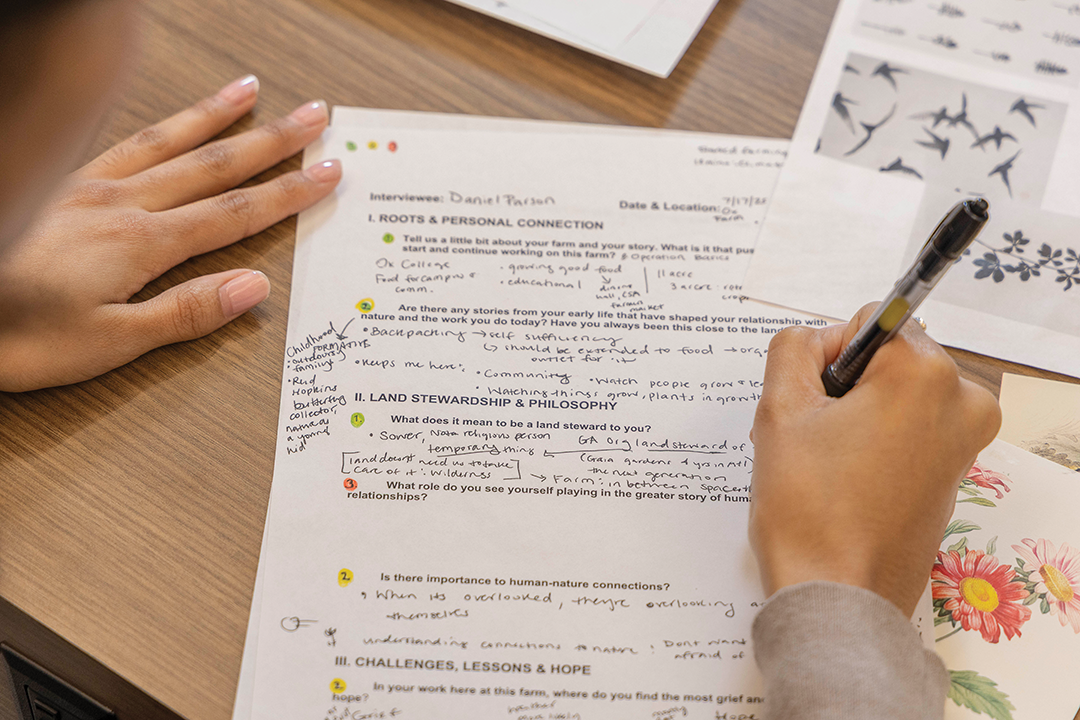
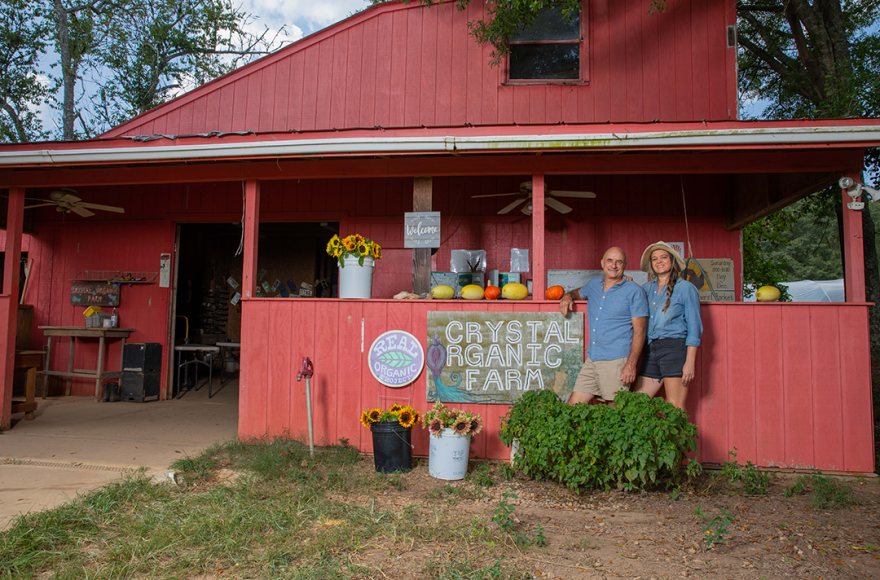
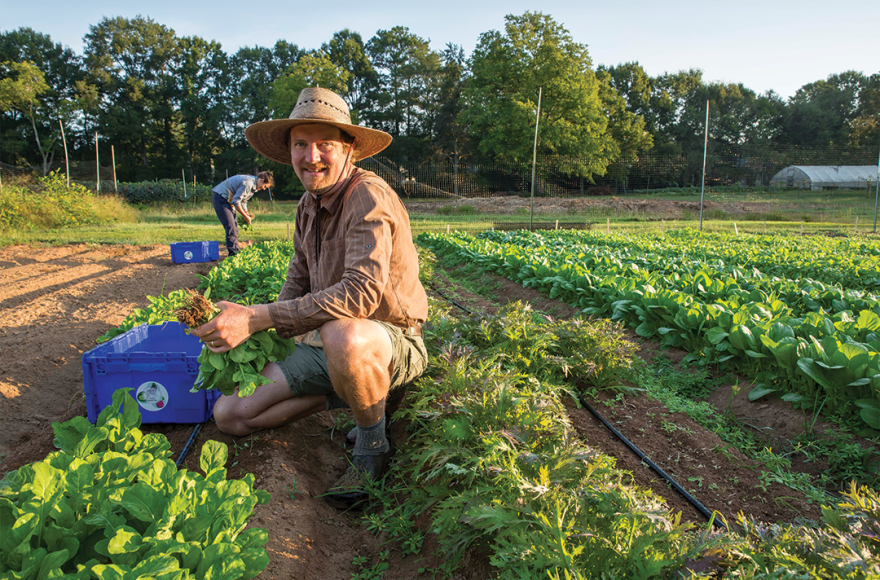
Once her proposal for the Summer Oxford Research Scholars program was accepted, she and McQuaide, as the faculty advisor, used a stipend and spent time with farmer and educator Daniel Parson at the Oxford College Farm, owner Sara Vinson at Yellow Hen Farm in Covington and co-owners Jeni and Nicolas Donck at Crystal Organic Farm in Newborn. They discussed climate problems and improving the future.
“We have a network of farms. They’re all connected; [the project] really showed the connectivity,” said Moscati, who was involved in environmental work and started an environmental club with her friends while at Rockdale County High School. “People connect and solve issues by sharing stories. Personal experiences are valuable to work that we do.”
Vinson notes that she has had Oxford students volunteer to work at her garden in the past and now enjoys connecting with them through Sustainable Newton, where she serves as co-founder and secretary. The community organization remains committed to local responses to global environmental issues.

“It was nice to have them out for a day of work on the farm. They’re willing to pitch in wherever needed, especially in more recent years,” said Vinson, whose small farm features greens, tomatoes, carrots, beets and other seasonal produce throughout the year. “I can tell they’re making an effort to get students involved in the community in many ways, especially in service areas.”
Vinson recalls how Moscati toured her farm with McQuaide, one of her customers, over the summer and discussed the importance of farming.
“It’s become part of my life. I wouldn’t know what to do without it,” said Vinson, who has run the farm for about 15 years at her home, where she has lived for roughly three decades. “It connects me to the environment. It connects to me the outside. It connects me to the community. I always say that I’m your personal farmer.”
Moscati’s project included a multi-page written synopsis and photos from her time at the farms. In addition, she presented her research at a summer symposium.
“This project demonstrates the most meaningful effects of high-impact, liberal arts teaching and learning. It brought together a humanities faculty member and natural science major to show how combining different disciplinary approaches to social problems like climate chaos deepens students’ critical-thinking capacities, preparing them for solving complex problems in the real world,” said McQuaide, who provided feedback and focus for Moscati’s project. “She had an idea for it, and she conceived it. Kaela’s enthusiasm, compassion, kindness and intellect inspire me daily. Students like her keep me devoted to this work and this institution.”
Although she completed the project, Moscati continues to reference it in her studies at Emory and wants to connect with more people when working with the environment.
“It really pushed me to realize how the importance of this moment [involves] navigating crisis and engaging with local communities to tackle bigger societal problems,” said Moscati, who indicated that the project “added soul” to the work she has been doing and allowed her to creatively plan future endeavors. “It enriched my college experience, and I feel more connected to greater Atlanta areas.”
McQuaide pointed out that the project represents just one example of ongoing efforts from Oxford students which involve the community. She encourages residents and businesses to use students for similar research and projects instead of viewing the campus as a bubble.
“Students like Kaela are very inspiring to me. They give me motivation to continue coming into work and doing this job. They fill me up,” McQuaide said. “There’s a connection between the college and the community. There’s a lot of really good kids there that care about people and community work.”