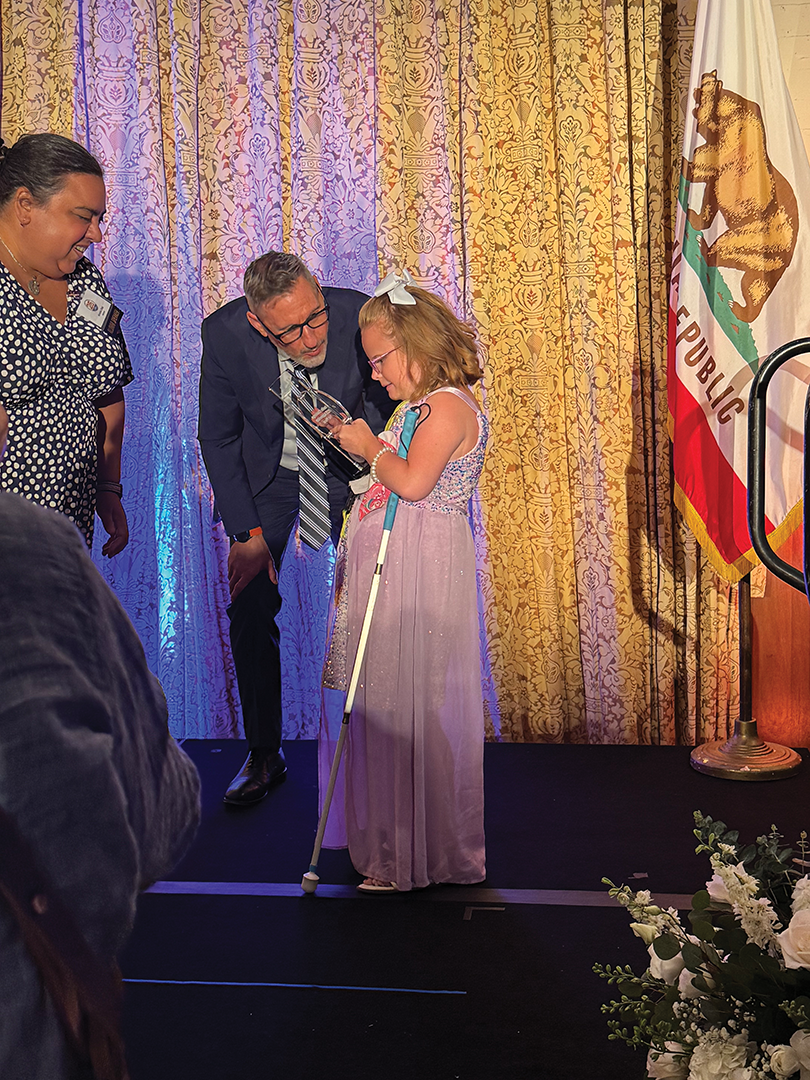
Kennedy Carlock has already done something extraordinary at just 8 years old—she read her way onto the national stage. A third grader at the Newton County STEAM Academy, she recently earned top honors in the Apprentice Division at the 2025 Braille Challenge Finals, held on the campus of the University of Southern California in Los Angeles. It is the only academic competition of its kind for blind and visually impaired students, celebrating literacy, problem-solving and confidence in Braille. Out of more than 1,300 participants from across five countries, only 50 made it to the finals. Kennedy was one of them.
When asked what she loved most about the experience, she did not hesitate. “I liked making friends,” she said. “I’m feisty.” That playful spark, accompanied by a grin, says everything about her. Kennedy’s mother, Katie, remembers how early the journey began.
“Kennedy started learning Braille when she was just 3 or 4,” Katie said. “We worked with the Center for the Visually Impaired in Atlanta through a grant to help kids start early, developing pre-Braille skills. That gave her such a strong foundation.” From there, Kennedy entered public school, where she met teachers who refused to let blindness limit her learning. “She had amazing teachers like Stephanie Piazza, who made sure she had everything she needed,” Katie said. “Then she met Miss Ann Summerson, who said from Day One [that] ‘she can do anything.’ And she meant it. She taught Kennedy the entire Braille code, even the Nemeth code for math.”
"We said from the start she wasn’t going to miss out." — Katie Carlock
Summerson was the teacher who first encouraged Kennedy to enter the Braille Challenge—a move that set the stage for what would become one of the Carlock family’s proudest moments. “From the start, we said, ‘She’s not going to miss out on anything,’” Katie said. “Blind doesn’t mean limited.” Each year, students compete in the regional Braille Challenge—Kennedy had done so for several years—but this was her first time qualifying for the trip to Los Angeles. She came close in 2024 but not quite close enough.
“She got first place at regionals, but the scoring system sent the student with the highest average score instead of the highest single score,” Katie said. “She was disappointed, but honestly, it just made her work harder. This year, she went all the way.” The experience in Los Angeles was less about winning than it was about belonging. “At her current school, she’s the only student who is blind,” Katie said. “At the Braille Challenge, she wasn’t the different one anymore. She was just Kennedy.”
That sense of connection meant everything. Surrounded by peers who use canes, read Braille and adore the same technology she does, Kennedy saw a glimpse of her own future, and it looked bright. She already had a strong support system in place.
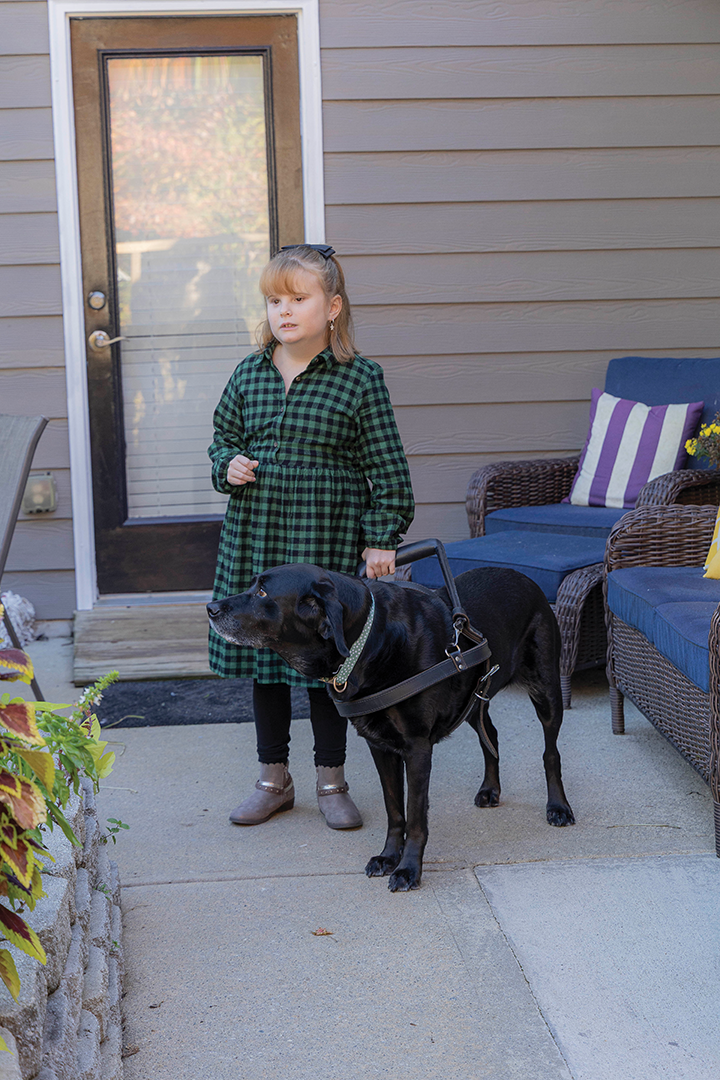
“Kennedy’s success is a family affair,” Katie said. “Her grandparents, Jeff and Pam Dugan, are deeply involved, and her cousin, Evie Baskett, is like a sister. We said from the start she wasn’t going to miss out. She rides rollercoasters. She’s in Girl Scouts. She’s a lunch reporter on her school’s news team. She even has a companion dog named Midnight from Dogs Inc., to prepare her for a guide dog one day.”
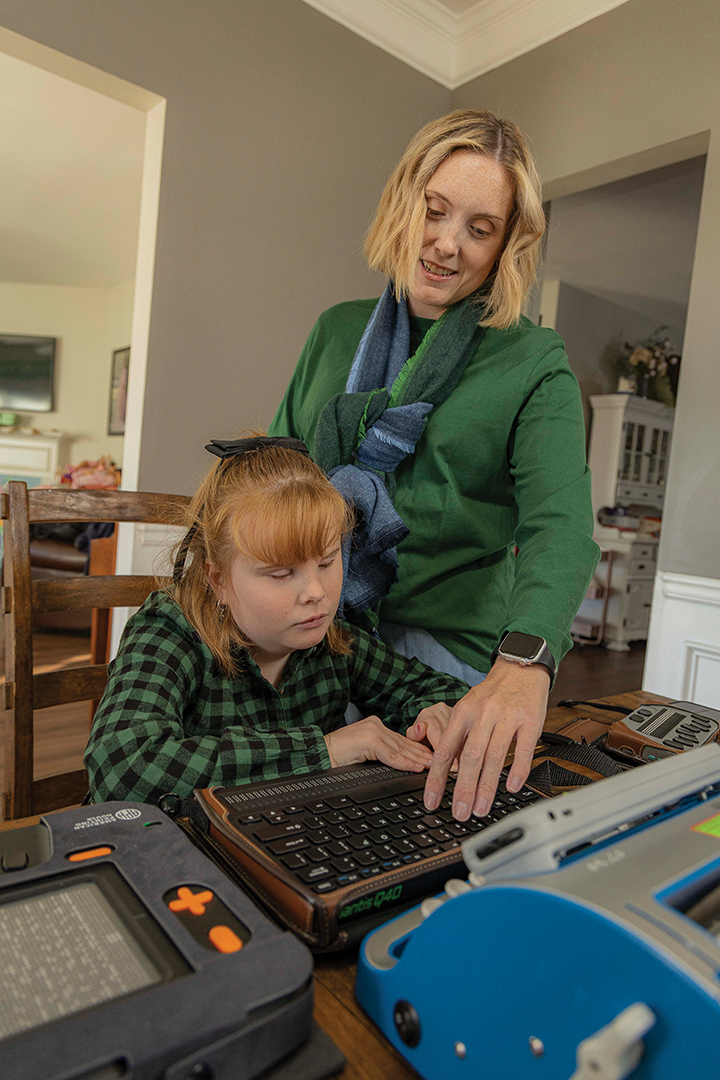
Kennedy’s village extends well beyond family. The Covington Lions Club has played a significant role in her journey, gifting her a smart Brailler when she was just 4 and later helping make the trip to California possible. They even had a Lions Club vest made for Kennedy with her name embroidered on it in Braille. The City of Porterdale went a step further, declaring a “Kennedy Carlock Day” in her honor.
“Her win isn’t just hers,” Katie said. “It belongs to every teacher, friend and community member who believed in her.”
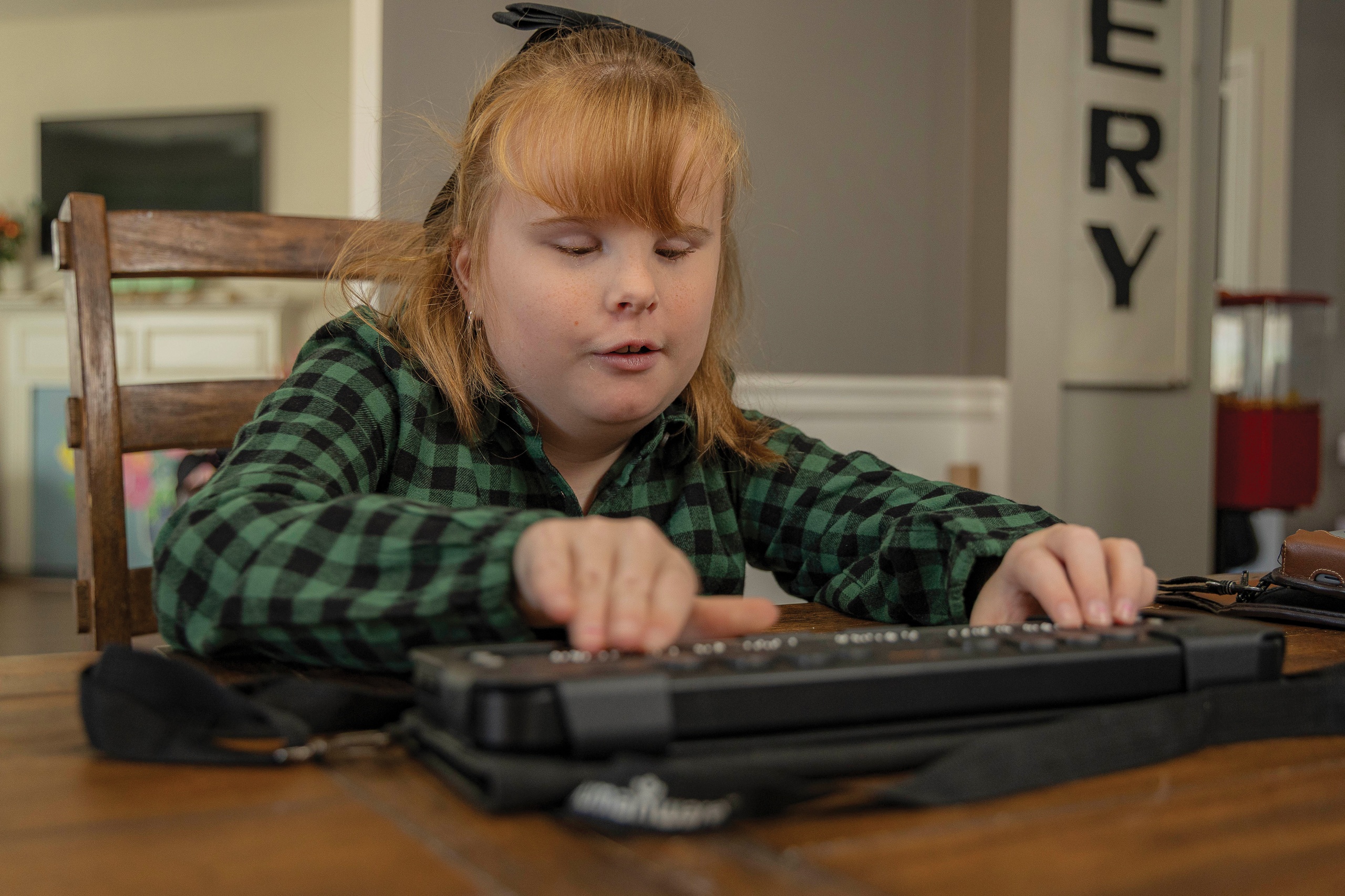
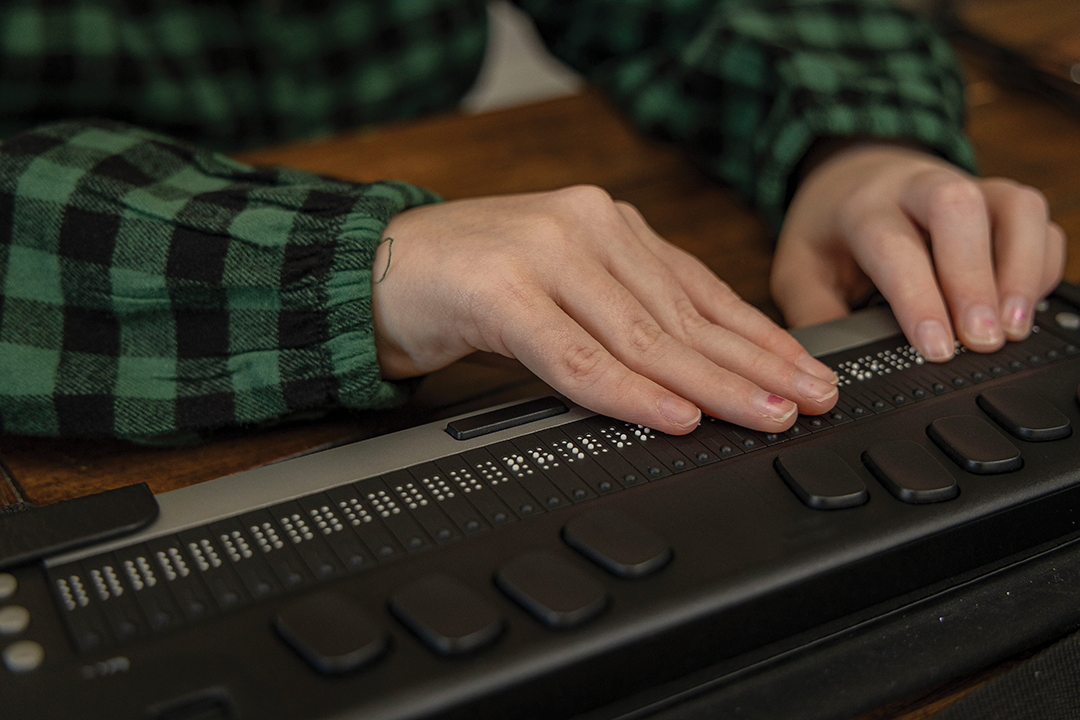
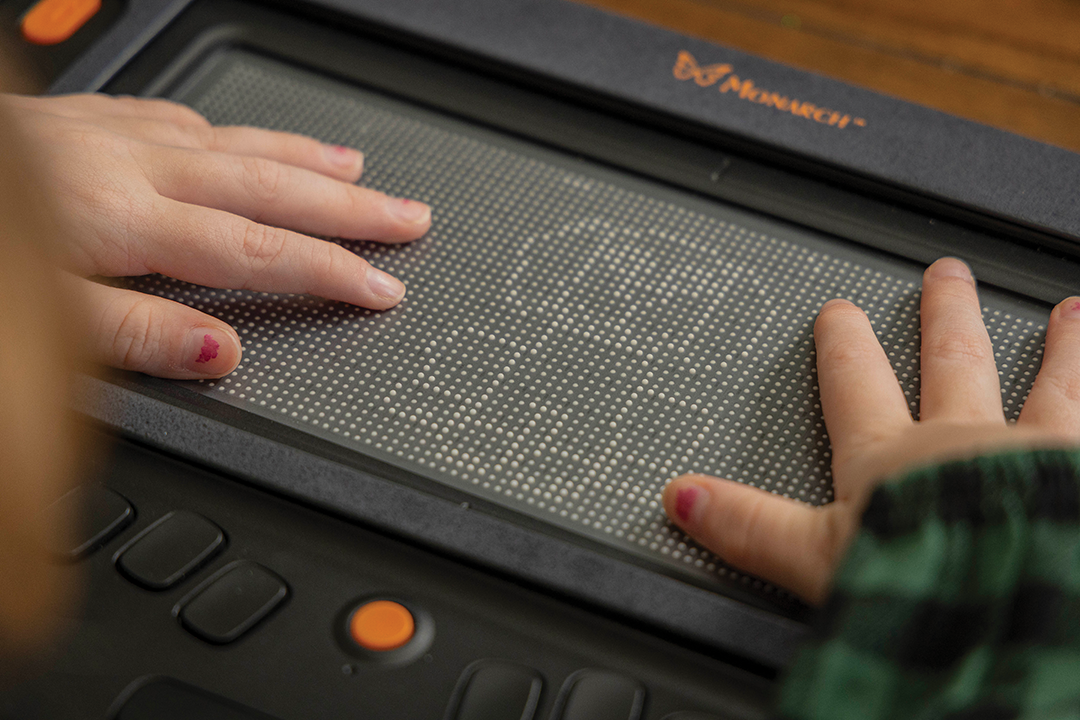
Kennedy is not just a strong Braille reader. She loves technology and dives into multiple interests and hobbies. She uses an electronic Braille device called the Chameleon, which lets her type and read Braille simultaneously, loves writing stories and recently starred in a commercial for the American Printing House for the Blind that demonstrated the organization’s new device: the Monarch. Kennedy is also a musician through the nonprofit Songs for Kids, which helps children and adults with disabilities record and perform original music. Between that, the Girl Scouts and her love for The Baby-Sitters Club book series, Kennedy’s calendar is full, her spirit even fuller. She will move up to the next Braille Challenge division in 2026, which means tougher reading passages, more difficult spelling and even stiffer competition. The Carlocks look forward to the experience.
“She’s determined and strong-willed,” Katie said, “but most of all, she shares her success. She knows how many people helped her get here, and she is thankful.”
From a quiet pre-K classroom to the spotlight of a national competition, Kennedy’s story involves perseverance, community and pure joy—the kind that reminds everyone that ability is not about sight but about vision. She hopes to break the stereotypes that often follow those who are visually impaired.
“We can do stuff,” Kennedy said. Her mother echoed those words with a proud smile and quiet conviction. “That’s exactly it. Blind kids are capable,” Katie said. “They may have to do things differently or use a tool or need you to give directions differently, but there is nothing they can’t do. Sometimes, the only thing that slows Kennedy down is that she’s 8.”
For information on the Center for the Visually Impaired in Atlanta and Dogs Inc. in Palmetto, Florida, visit cviga.org. and dogsinc.org.