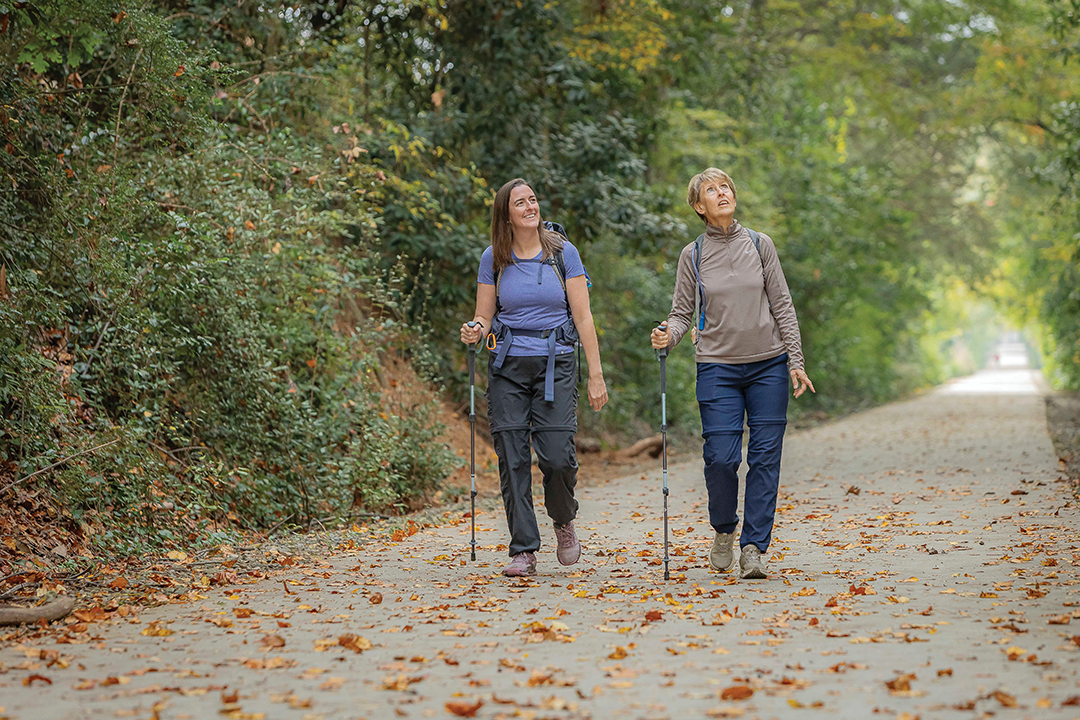
Nancy Schulz and her daughter, Alexandria, have enjoyed many outdoor adventures together over the years. Even so, they share slightly different versions of one of their first—a family vacation to Germany and Switzerland when Alexandria was just 9 years old and her younger brother was 7. “Mom marched us over this mountain 20 miles in the snow,” she said with a laugh. “Some [miles] in rain, some in snow,” her mother said, offering a good-natured protest. “We got lost,” Alexandria said. “We weren’t lost,” Nancy said. “We were in Interlaken.”
Since those early days, the daring duo has hiked—and sometimes snow skied—in numerous national parks in America and in such faraway places as Costa Rica, New Zealand and multiple countries in Europe. In the spring of 2025, they went on a hike unlike any they had taken before. More than a walk in the park, it was a pilgrimage on hallowed ground. The Camino de Santiago, or “The Way of Saint James,” is a network of caminos (ways, or routes) commemorating the travels of James the Apostle as he evangelized Spain. Every year, thousands of pilgrims come from around the world, taking one of many caminos originating from various points in Spain, Portugal, France and beyond, all leading to one destination in Galicia, Spain—the Santiago de Compostela Cathedral, the traditional resting place of the country’s patron saint.
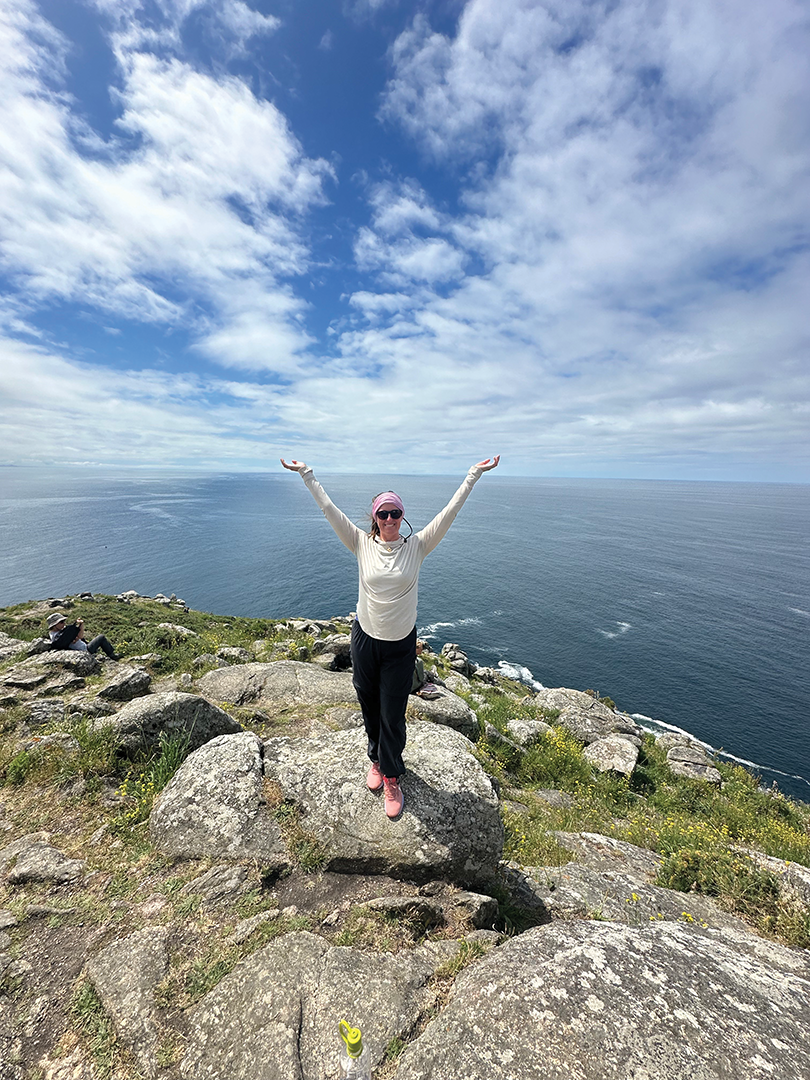
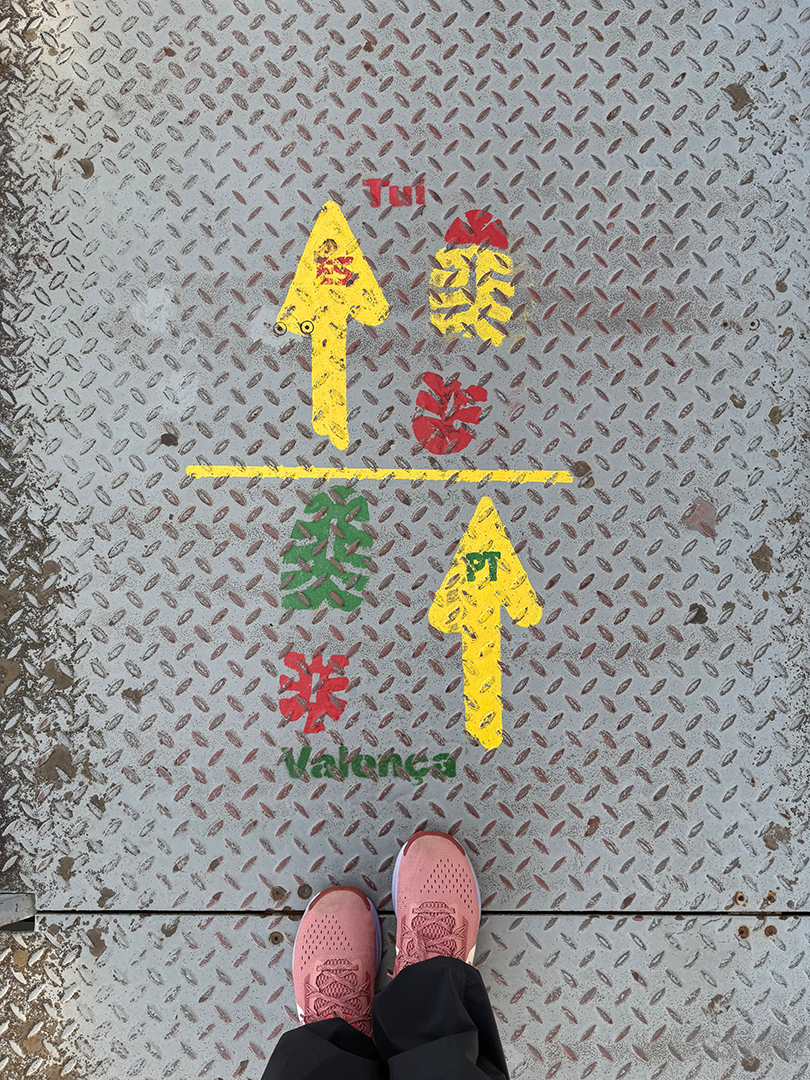
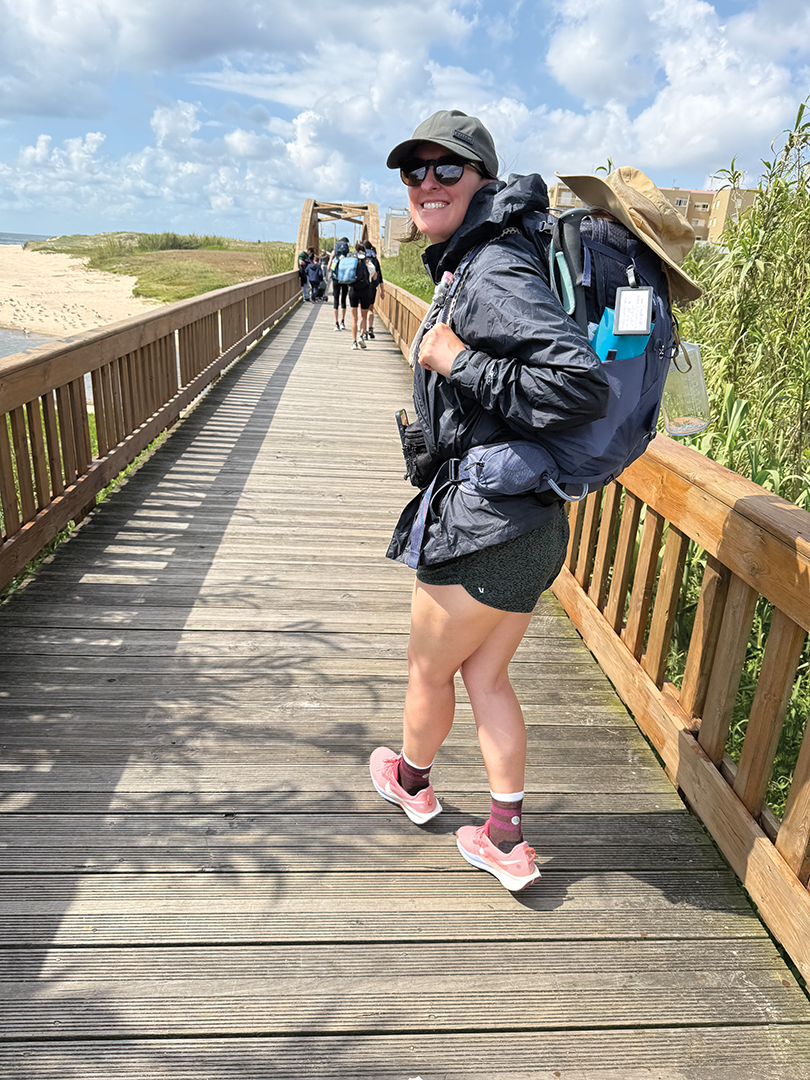
Alexandria was the first to express an interest in going on the pilgrimage back in 2010. Nancy gradually warmed to the idea, eventually asking her daughter to accompany her on the trip to commemorate her 70th birthday. The timing was right for 39-year-old Alexandria, who had begun to reevaluate a high-pressure career in consulting and tech while starting to reconnect with her “more creative and arts-focused passions.” Nancy did the research to formulate an itinerary and arrange for overnight accommodations on the Camino Portuguese, the second-most popular route on the Camino de Santiago. Alexandria took a sabbatical from her job and, along with her mother, focused on training and preparation. “You want to train walking for those distances in the gear you’re going to use,” she said. “I was testing out backpacks, hiking poles, socks, shoes. You learn how to handle your blisters, tape your feet.” Mother and daughter arrived in Porto, Portugal, and on May 10, they took the first of many memorable steps on their 14-day, 184-mile pilgrimage on the Camino.
"This whole experience helped me understand how to live in the moment, to really appreciate nature and to appreciate how simple life can be if you just let it." — Nancy Schulz
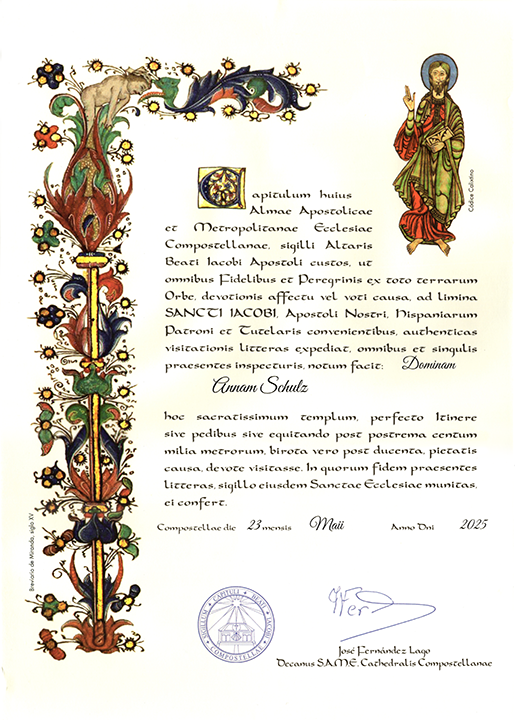
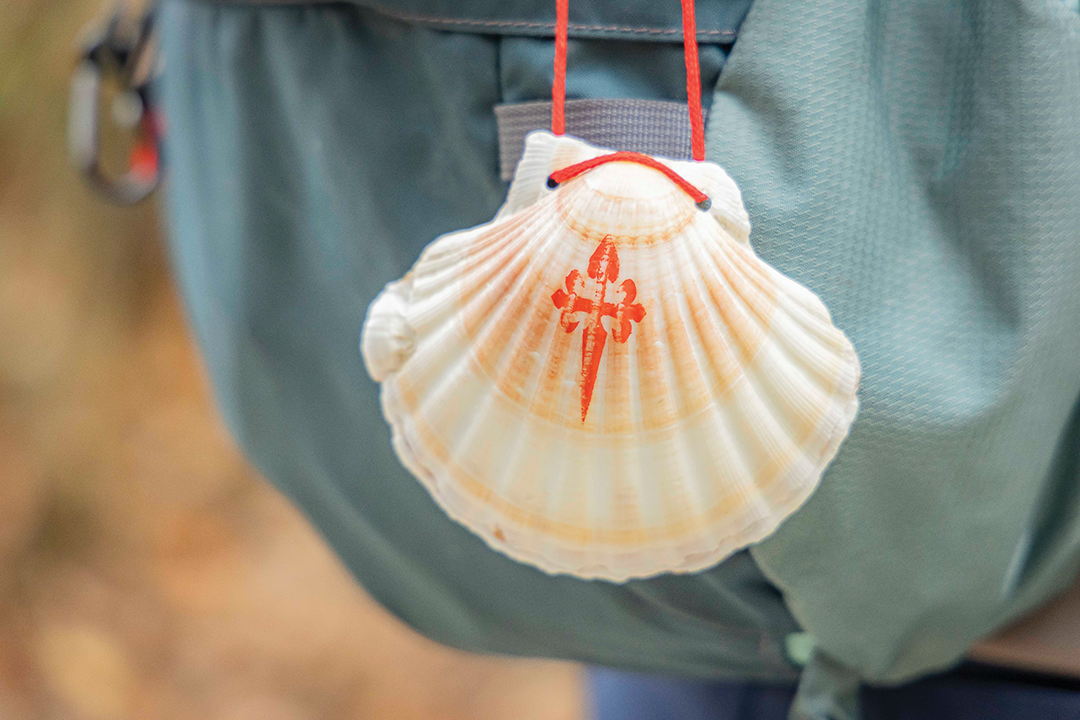
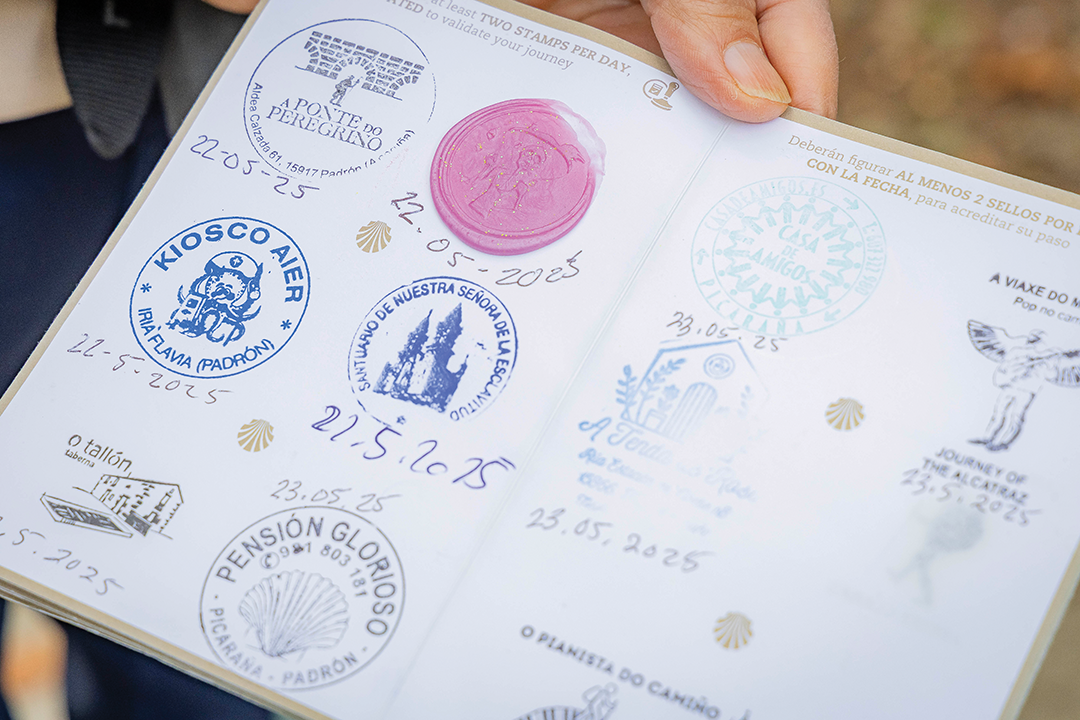
Alexandria carried a backpack containing 15–20 pounds of supplies, including clothes, water bottles, foot care items, phone chargers, an emergency kit, protein, duct tape and Teva sandals for tired feet at day’s end. Nancy elected to have her pack, similarly stocked, transferred by porters from one overnight accommodation—primarily guesthouses and hostels—to the next. Both wore a scallop shell, the iconic symbol of the Camino. A Camino passport, stamped by participating business establishments along the way, would enable them, upon arrival in Santiago, to receive the cherished Compostela, a certificate of completion of the journey.
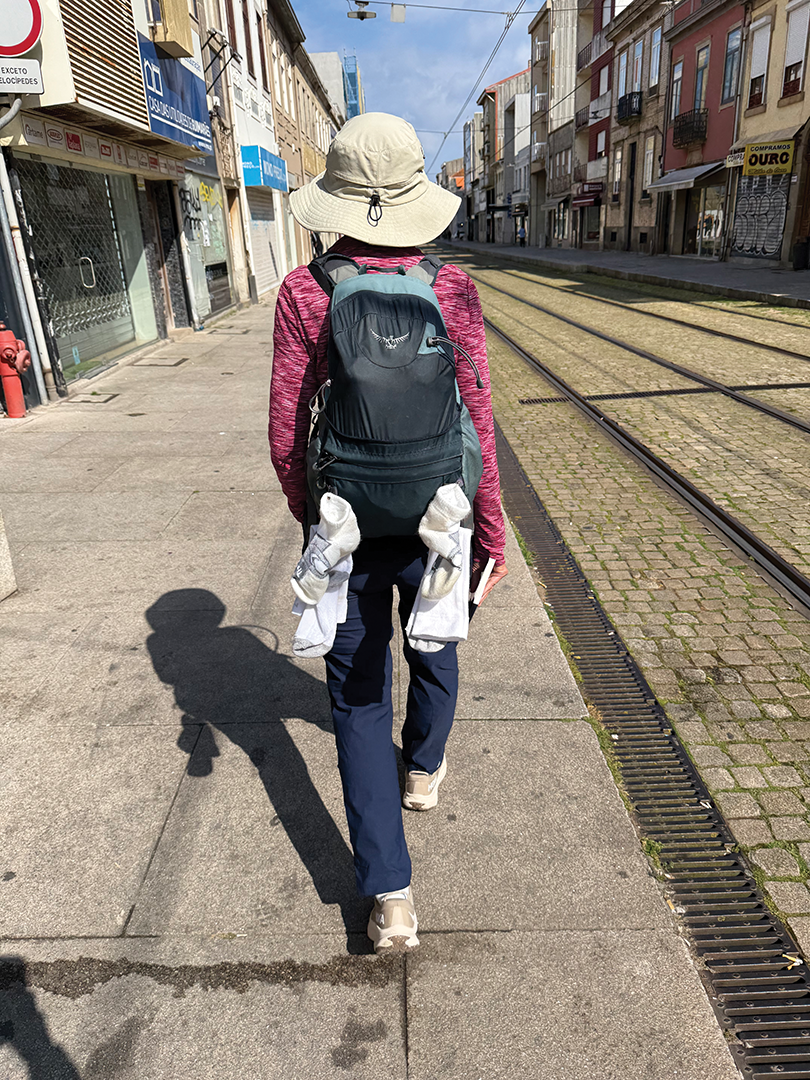
Guided by GPS, Nancy and Alexandria pointed toes toward Santiago and pushed off. From Porto, the two followed the Litoral, Coastal and Central routes, tramping over cobblestones, boardwalk and woodlands. “Then, after we crossed over into Spain, we [went] on the Spiritual Variant, which is like the road less traveled,” Nancy said, “and it is spectacularly beautiful.”
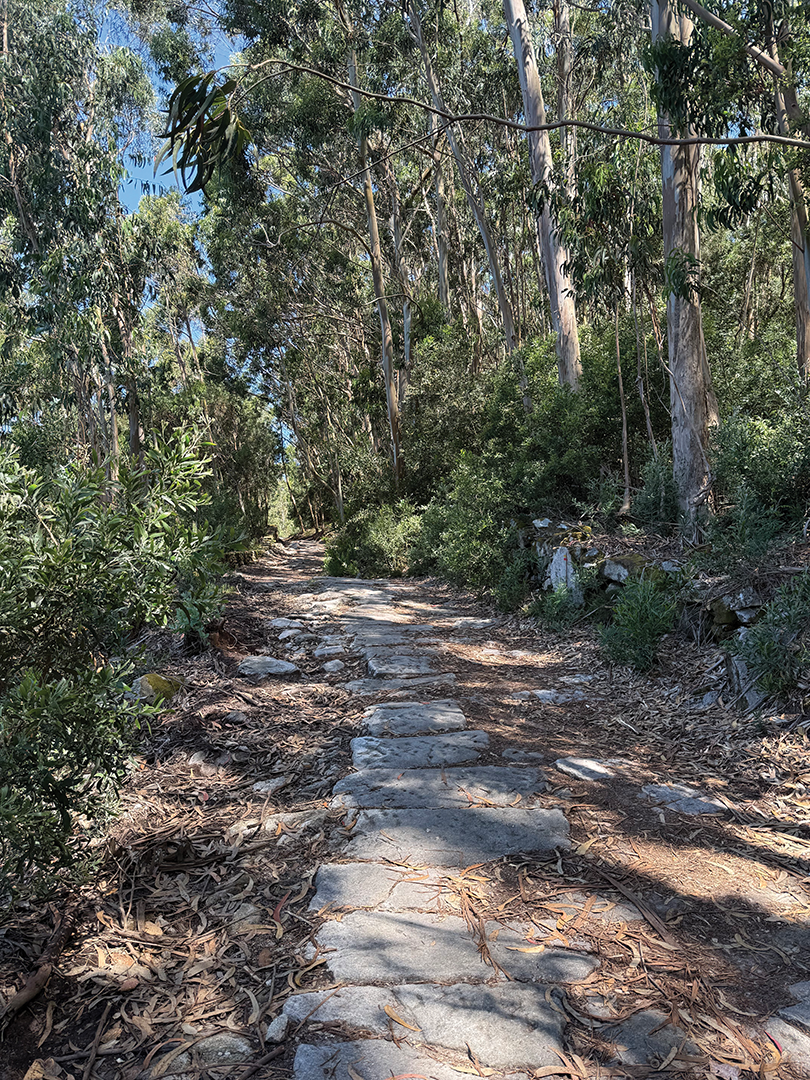
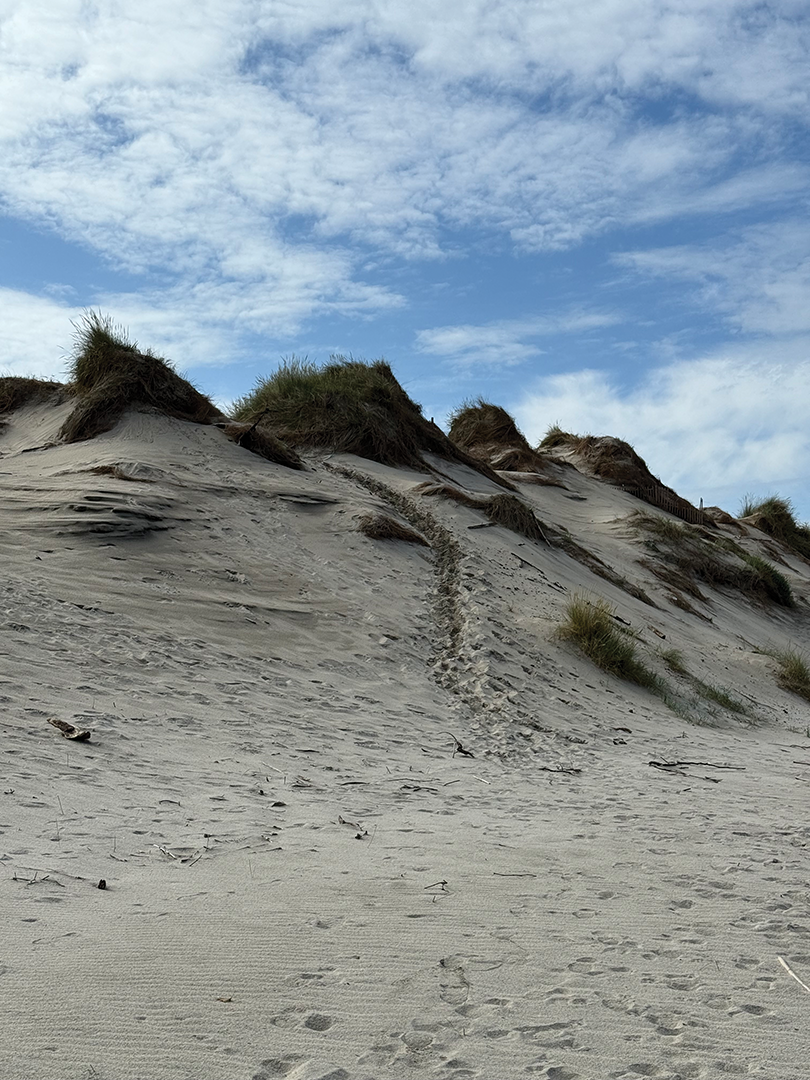
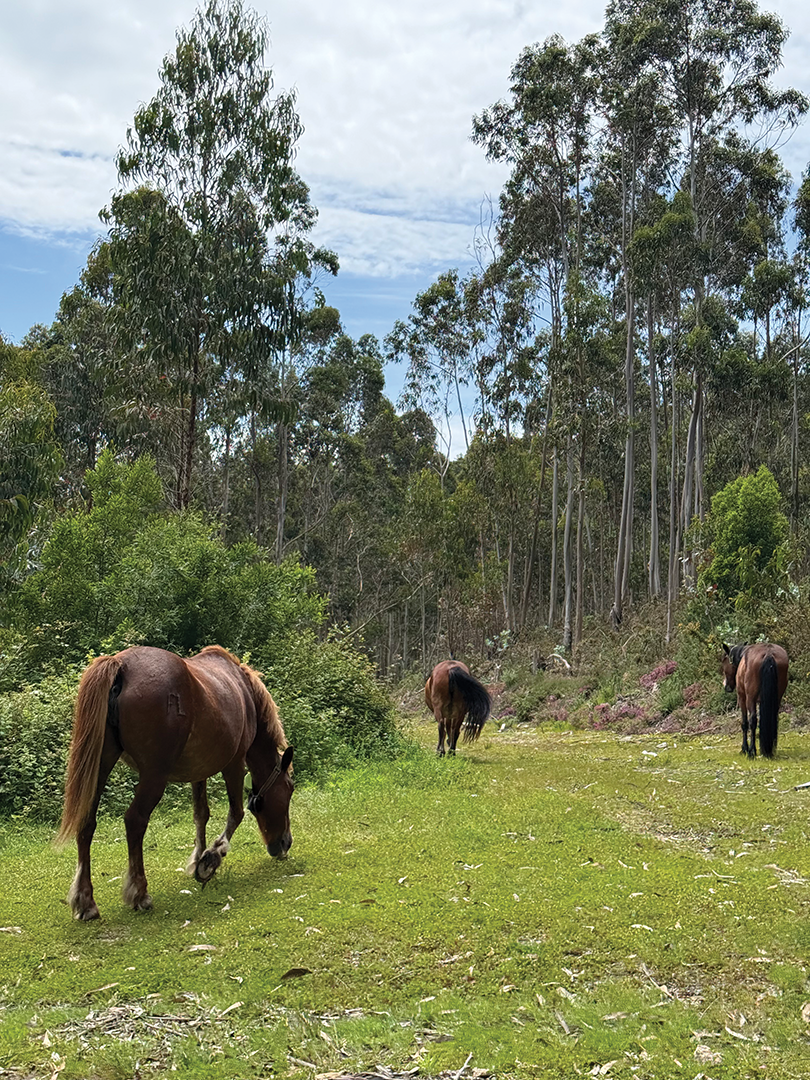
While on the pilgrimage, she made daily Facebook posts chronicling their Camino experience. An excerpt from May 22: “Despite its name, there are minimal shrines, religious symbols or churches on the Spiritual Variant. Instead, it is filled with the most stunning scenery we have seen thus far … challenging terrain, breathtaking vistas and brilliant hues of vegetation framed by an azure blue sky. We are almost alone on this trail except for the sounds of birds, roosters and baby goats. At one point, we encountered 10 horses grazing on the path. It was magical. Tonight we are staying in a monastery. Each day has been a mixture of wonder and tired feet. Both of us agree that today was the most exhausting filled with the most wonder.”
The trail is a diverse mix of coast and countryside, remote villages and larger cities. Yet every day was the same in its simplicity.
“You get up, eat, walk, eat a little more, go to the bathroom, shower when you get to your destination, sleep and then you do it all over again,” Nancy said. “It’s so simple,” Alexandria said. “All you’re accomplishing is that you need to get from here to there. It helps you to be really present.”
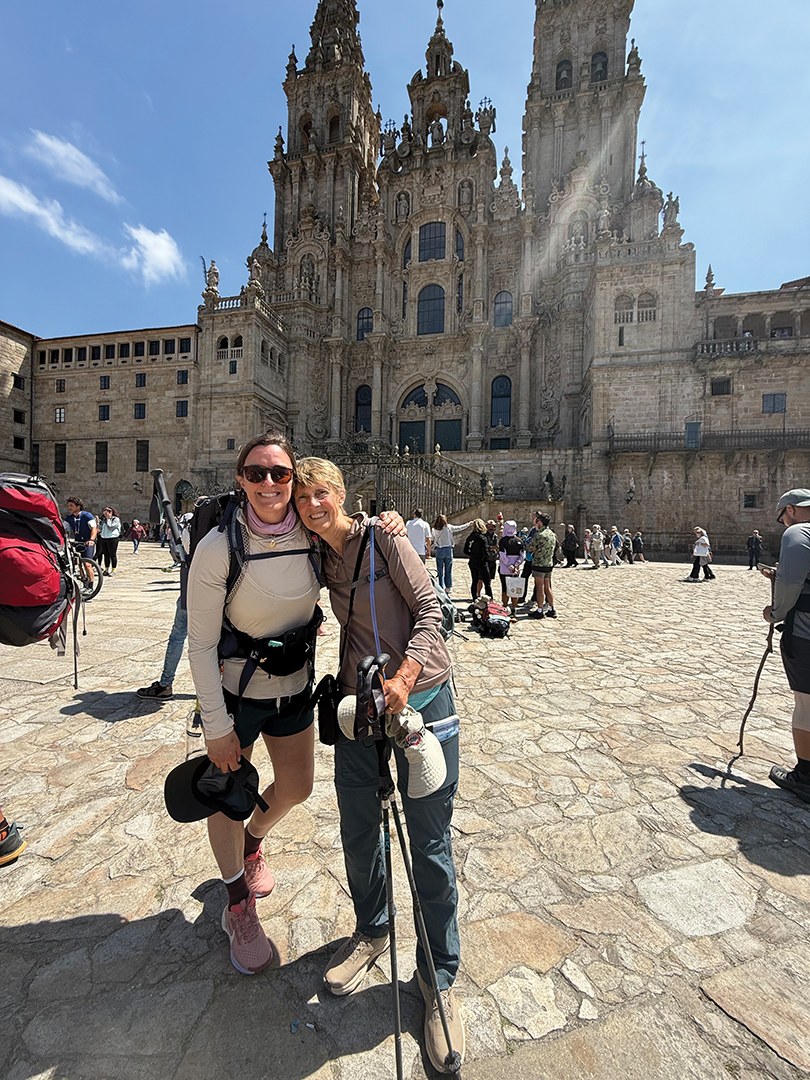
A whole economy has grown up around the trail, from hostels, restaurants, shops and entrepreneurial masseurs to Uber drivers and a host of others—all providing support to the thousands of pilgrims who pass by each year. Sometimes, needed help seems to come out of nowhere. “There’s a saying that ‘The Camino will provide,’” Nancy said. “There were several times where we would get lost and, all of a sudden, somebody would show up and say, ‘You go that way.’” When Nancy and Alexandria finally arrived at the tangible goal of every Camino pilgrim—the magnificent Santiago de Compostela Cathedral—it confirmed, in a surprising way, what they had already learned.
“This whole experience helped me understand how to live in the moment, to really appreciate nature and to appreciate how simple life can be if you just let it,” Nancy said. “When I walked into the cathedral, I couldn’t even stay. I had to leave because it was so ornate, so opulent, so contrary to what I had felt for two weeks. It was a distraction.”
Though Alexandria had originally been drawn to the pilgrimage by a thirst for adventure, in the end, she had come simply seeking direction for the next chapter of her life. Somewhere along the Camino, she found it. “I just walked away with clarity of like, ‘I’m on the right path,’” she said. “I came back with a goal to do more art and really double down on that.” Nancy’s love of the outdoors, and deep appreciation of different cultures was more than enough to conquer language barriers and doubts of whether she could finish the walk. Now back in the real world, she strives to maintain some sense of the peace and simplicity she experienced on the Camino.
With one more backward glance, Alexandria recounted the moments leading up to the end of their pilgrimage. “Once we got to the point where we could see the steeple and we had to kind of wind through Santiago,” she said, “those final steps felt really special.” After rather miraculously bumping into a fellow pilgrim they had befriended days earlier, it was time to go to the cathedral and receive the treasured Compostela. Alexandria described what she called a shared “spiritual experience” with their newfound friend, Bernie. “We ended up walking into the square together with this stranger from Austria that we had met at the top of a random mountain,” she said. “That’s a very emotional moment, after you’ve come all this way, to then walk into the square together and you’re like, ‘There it is. We did it!’ It kind of takes your breath away.”